Anyone who starts studying sumi-e soon meets four subjects: bamboo, orchid, plum blossom and chrysanthemum. In the Chinese tradition, and then the Japanese one (where they are called *shikunshi*), they are known as the four gentlemen: plants whose character represents the virtues of a wise and honest person.
They are not only symbols: they are also a school. Each gentleman teaches a fundamental brushstroke, and together they contain almost all the technique of sumi-e.
The plum: courage (winter)
The plum (*ume*) blossoms at the end of winter, when it is still cold and sometimes snowing. That is why it symbolises courage and hope: beauty born in hardship.
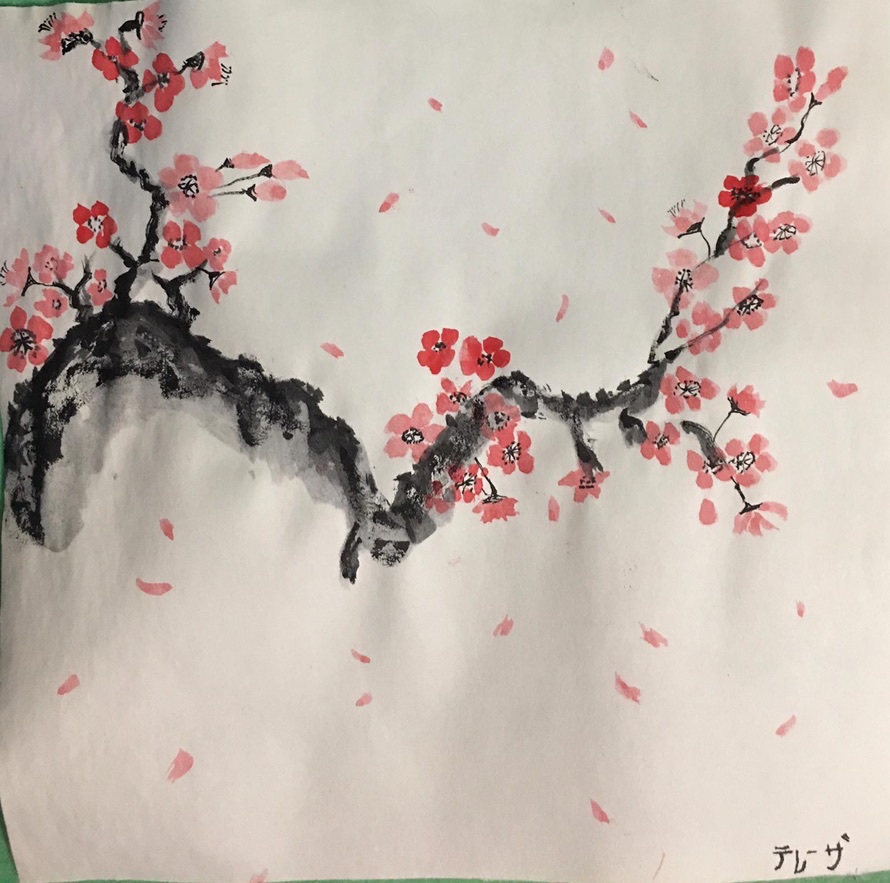
In sumi-e the plum branch teaches contrast: the old, knotty wood, painted with a loaded, quick brush, and the delicate flowers, added with small round touches. Our Blossoming plum branch is born from exactly this contrast, with the red and pink of the petals flying away.
The orchid: grace (spring)
The wild orchid grows in hidden places and is fragrant even if no one sees it. It is the symbol of modesty and inner refinement.
Technically it is the hardest subject to start with: the long leaves are painted in a single gesture that starts thin, widens and becomes thin again. It takes a soft, confident wrist.
Bamboo: integrity (summer)
Bamboo bends in the wind but does not break, and it is hollow inside: that is why it represents flexibility, humility and integrity.
It is the subject most used for learning: the stem is painted in segments, with decisive strokes, and the leaves with quick pointed strokes. Many painters say it takes a lifetime to paint bamboo well.
The chrysanthemum: longevity (autumn)
The chrysanthemum blossoms in autumn, when other plants wither. It symbolises longevity, nobility and serenity. In Japan it is also the flower of the imperial family.
In sumi-e it teaches how to build a round, full shape with many small petals, and how to use the different tones of ink to give depth.
Beyond the four gentlemen
Once the four gentlemen have been learnt, the painter moves on to other much-loved subjects:
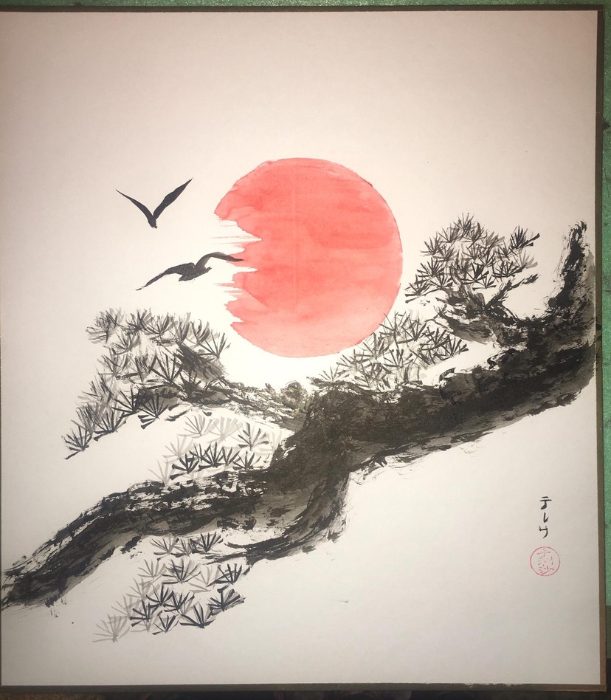
- the pine, a symbol of long life and endurance, often painted with the red sun (as in our Red sun and old pine);
- Mount Fuji, Japan's sacred mountain;
- the crane, a symbol of good fortune and long life;
- the maple in autumn, with its star-shaped leaves;
- the ensō, the Zen circle drawn in a single gesture.
Why choose them for your home
A painting with one of the four gentlemen is not only decorative: it brings a wish into the home. The plum for a new beginning, bamboo for strength, the chrysanthemum for a long life, the orchid for serenity. That is why they are also much-appreciated gifts (some ideas in Gift ideas: original Japanese art).
Discover the available paintings, or learn more with What is sumi-e.