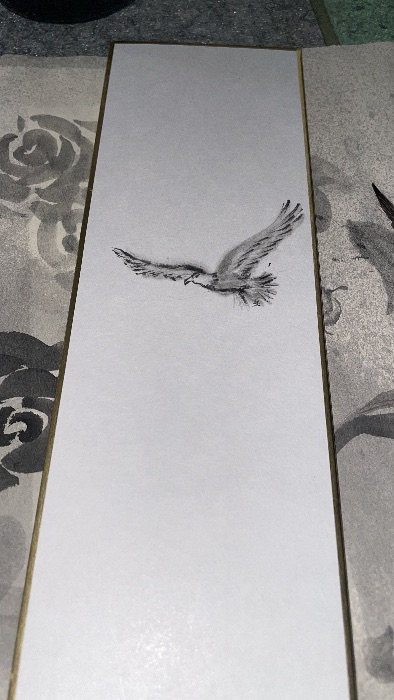
The sumi-e we know today is the result of almost a thousand years of history, between China and Japan, monasteries and palaces, masters and schools. Here are the main stages.
Chinese roots
Monochrome ink painting was born in China, and developed above all during the Tang (7th–10th century) and Song (10th–13th century) dynasties. Chinese painters, often scholars and officials, used the same tools as calligraphy, brush, ink, stone and paper, to paint immense landscapes, misty mountains, bamboo and flowers.
For them painting was not a trade: it was a way of cultivating the spirit, like poetry and calligraphy.
Arrival in Japan with the Zen monks
Between the end of the Kamakura period (1185–1333) and the Muromachi period (1336–1573), ink painting reached Japan mainly thanks to Zen Buddhist monks, who travelled to China and returned with paintings, books and new techniques.
In Zen monasteries painting became a spiritual practice. The paintings were not sacred images to be venerated: they were a way of expressing a state of mind, the concentration and freedom reached through meditation. The speed and simplicity of the gesture fit the Zen spirit perfectly.
Shūbun and landscape painting
In the first half of the 15th century the monk-painter Tenshō Shūbun helped define the Japanese ink landscape: mountains, trees and small shelters set in great empty spaces.
Sesshū Tōyō, the great master
The most important name in the history of sumi-e is Sesshū Tōyō (1420–1506), a Zen monk who followed in the tradition of Shūbun. After a journey to China, Sesshū returned to Japan with a mature and highly personal technique: strong strokes, at times almost violent, bold compositions, great intensity.
Sesshū is considered the father of the Japanese style of ink painting, and several of his works are today classified in Japan as National Treasures. His famous landscape in the "splashed ink" style (*haboku*), made of a few blots of ink, is still a model of freedom and synthesis.
Schools and spread
After Sesshū, ink painting spread to the provinces and important schools were born, such as the Kanō school, which dominated official Japanese painting for centuries. In the Edo period, the literati painters (*bunjin*) rediscovered the freer, more poetic Chinese painting, with its classic subjects: bamboo, orchid, plum and chrysanthemum (you will find them in The four gentlemen).
Sumi-e in the West
From the end of the 19th century Japanese art fascinated European artists: it was the period of *Japonisme*, which influenced the Impressionists and Post-Impressionists. In the 20th century sumi-e was also discovered as a meditative practice, and today courses and workshops combining painting and meditation are held all over the world, Italy included.
Sumi-e today
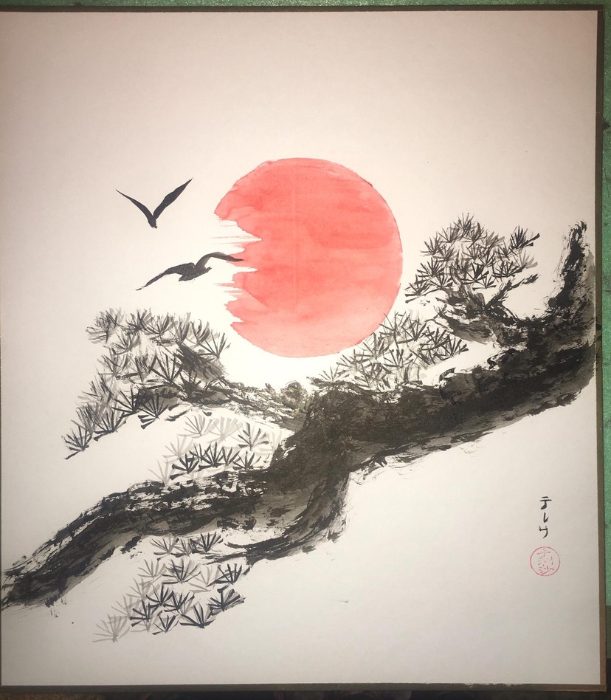
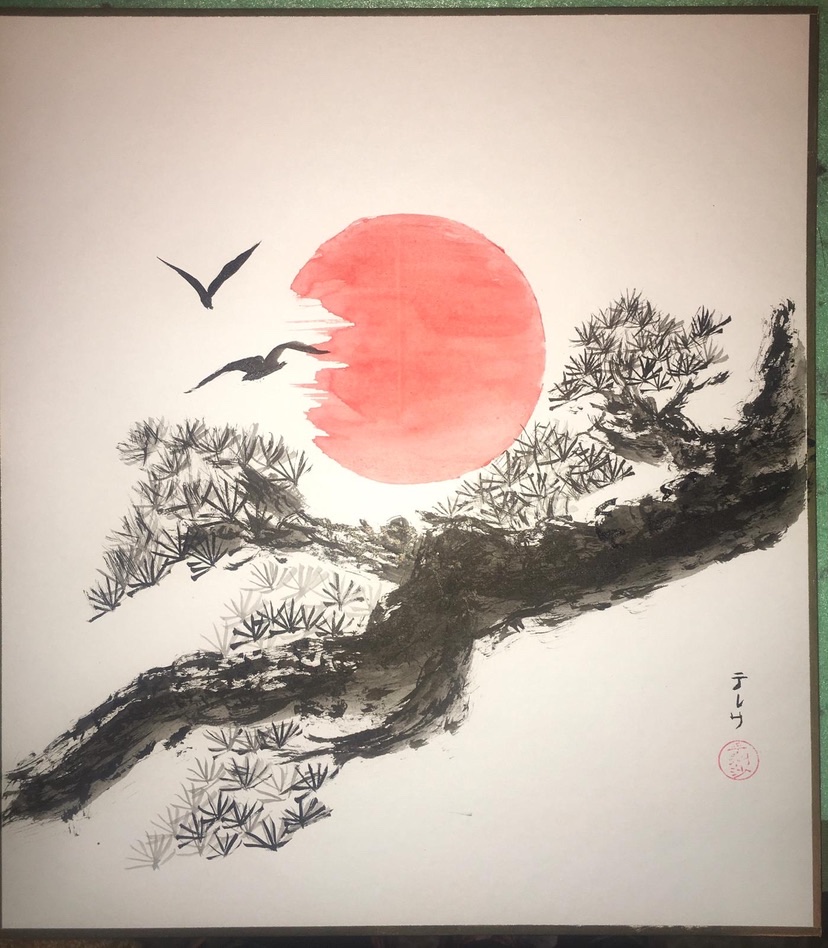
Contemporary sumi-e lives alongside tradition: the classic subjects remain, but each painter brings their own story. In Teresa's paintings, for example, the pine and red sun of the Japanese tradition meet the light of southern Italy.
Discover our original sumi-e paintings, or go back to the basics with What is sumi-e.