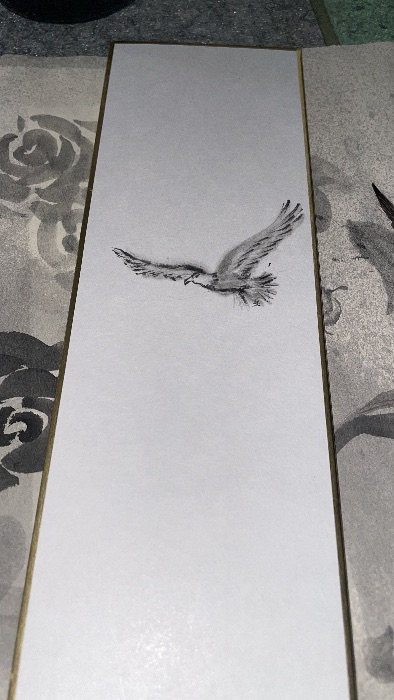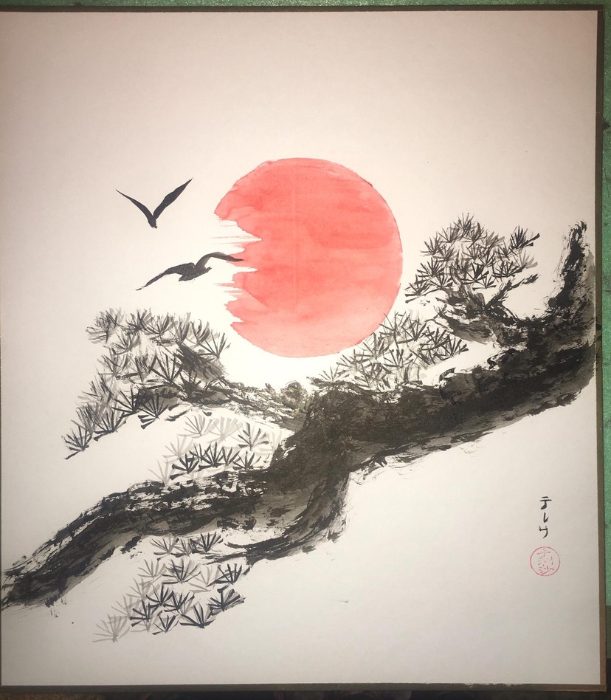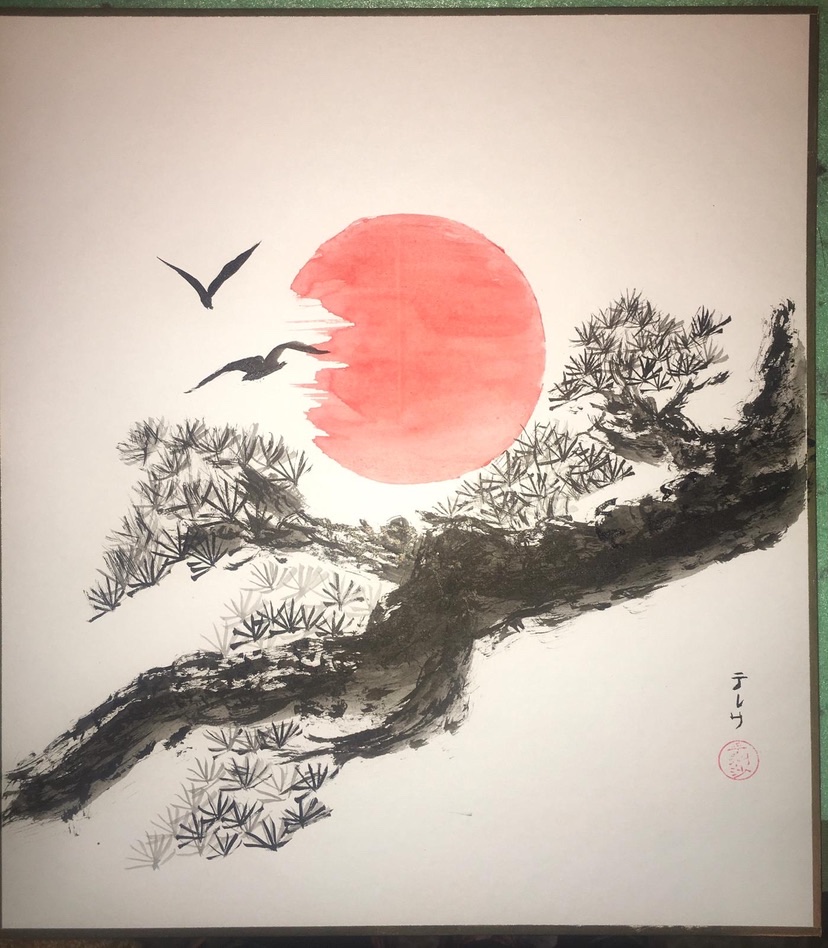
Pietra e Inchiostro ("stone and ink") was born from two ancient passions that, at first sight, seem very far from Calabria: suiseki, the Japanese viewing stones, and sumi-e, the ink painting born in China and perfected in Japan by Zen monks.
And yet, in Calabria, between the sea and the mountains, these two arts have found a home. The sea and rivers of our land have been polishing stones for thousands of years; the southern light, on winter mornings, has the same clarity as a Japanese print.
What we do
Behind every piece there is a single person: Teresa. She walks along the beach and the riverbeds looking for stones, she carves the wooden stands by hand, and she paints pines, moons and blossoming branches with ink and brush.
In the shop you will find two kinds of works:
- [Suiseki](/en/suiseki): natural stones, never carved, chosen because they recall a landscape (a mountain, an island, a waterfall). Each one is presented on its daiza, the wooden stand carved to fit it.
- [Sumi-e and watercolours](/en/dipinti): original paintings in sumi ink, sometimes with a touch of colour, on shikishi boards or rice paper. Each one carries Teresa's signature in Japanese, テレサ, and her red seal.
Why "one of a kind" is not a slogan
There is no second stone identical to the one you see: the sea does not make copies. And there is no second version of a sumi-e painting: the brush passes over the paper only once, and a gesture cannot be corrected. That is why every piece comes with a signed certificate of authenticity, and when a piece finds a home it stays visible among the sold works, but it will never be available again.
What this blog is for
Suiseki and sumi-e are still little known, and good information is often only available in Japanese or in specialist circles. Here we want to talk about these arts in a simple, passionate way:
- what a suiseki is and how to recognise a beautiful stone;
- the history of sumi-e, from Zen monks to the present day;
- how to display a stone or a painting at home;
- where to see suiseki and Japanese painting in Italy.
If you want to start, we suggest two articles: What is a suiseki and What is sumi-e.
And if you have questions, about a piece or about these arts in general, write to us: we will answer personally.