At first sight they seem the simplest arts in the world: a stone picked up in a river, a few strokes of ink on a sheet of paper. And yet suiseki and sumi-e have crossed centuries and oceans, and today they have enthusiasts, clubs, exhibitions and schools all over the world, Italy included. Why?
1. They teach you to look
We live surrounded by fast images that scroll across a screen in a second. A suiseki or a sumi-e painting asks for the opposite: to stop. In front of a stone you begin to notice a peak, then a path, then the mist. In front of a painting, the movement of the brush, the emptiness, the breath.
It is an exercise in attention that many describe as a daily form of meditation, with no instructions needed.
2. They celebrate imperfection: wabi-sabi
Japanese aesthetics has a word for the beauty of simple, imperfect things marked by time: wabi-sabi. A stone worn by water, a stroke of ink that bleeds a little, wood that darkens over the years.
In a world that always demands perfection, wabi-sabi is a breath of fresh air: it reminds us that cracks and irregularities can be beautiful too.
3. Every piece really is unique
There are no two identical stones, and a brushstroke is never repeated exactly. Owning an original suiseki or sumi-e means having something that exists only once in the world, the opposite of mass-produced objects.
4. They bring nature into the home
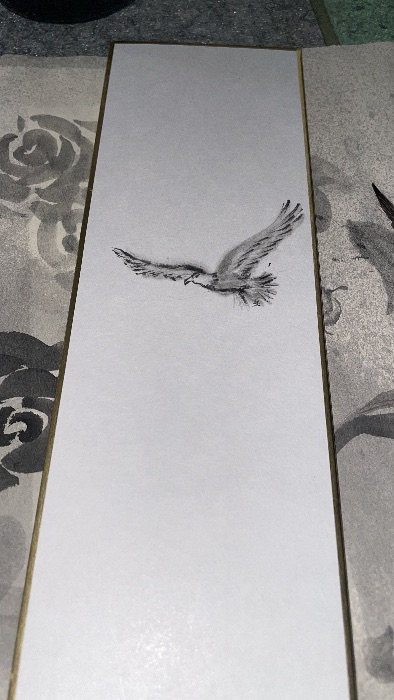
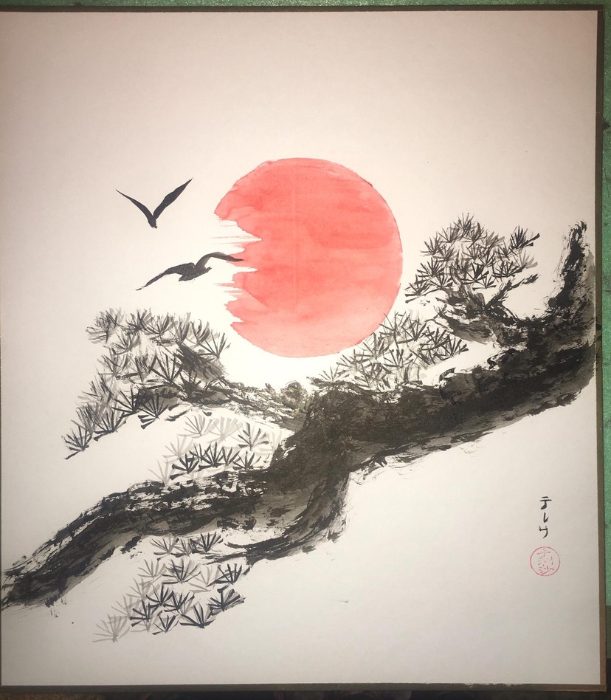
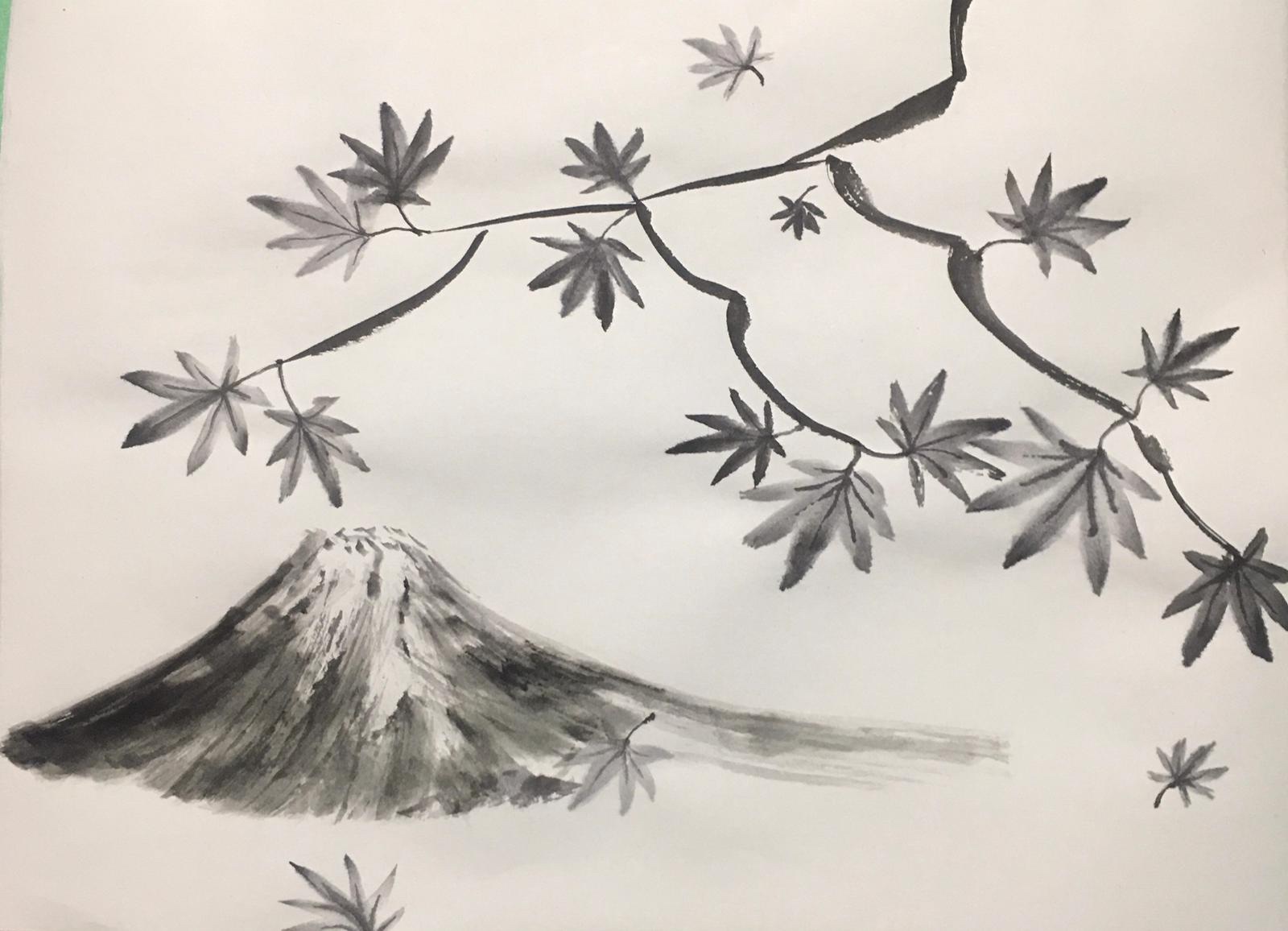
A suiseki is a landscape in miniature: a mountain on the shelf, an island on the table. A sumi-e brings the season into the home: the plum at the end of winter, the maple in autumn, the summer moon. For those who live in the city, it is a way of always having a piece of nature in front of their eyes.
5. They are arts you can practise
You do not need to be an expert to start. You can look for your first stone on a walk along a river, or pick up a brush in a sumi-e course. Many enthusiasts say that the real gift is not the result, but the time spent searching, looking, trying.
6. They unite distant cultures
Suiseki and sumi-e were born in China, grew in Japan and today speak to people from every country. The rules are the same in Kyoto, Milan or Calabria: water polishing stone, ink flowing over paper. It is a universal language.
And for us?
For Teresa, who looks for stones on the beaches and rivers of Calabria and paints in ink, these two arts are a way of living with more calm and more attention. Every piece from our workshop is born from this spirit.
If you want to start discovering them, here is where to begin: