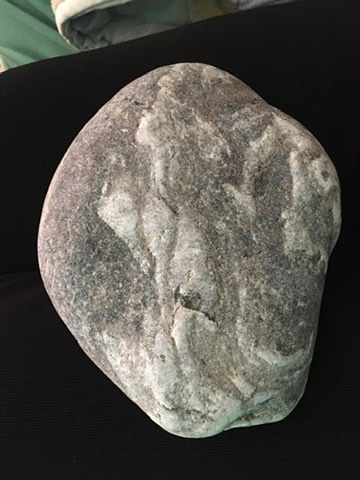
The love of stones that "speak" is much older than the word *suiseki*. To understand its history we have to start in China, cross the sea to Japan and, many centuries later, arrive in Europe and Italy.
Chinese origins: the scholars' stones
In China, more than a thousand years ago, officials, poets and painters collected stones of extraordinary shapes. They called them *gongshi*, often translated as "scholars' stones": they were displayed on desks, next to brushes and inks, like small mountains to contemplate while studying.
The most famous Chinese stones were often tall, pierced, full of hollows and twists. They represented the sacred mountains, homes of the immortals, and invited meditation.
Arrival in Japan
With the cultural exchanges between China and Japan, which grew from the 6th–7th century together with the spread of Buddhism, the art of the miniature landscape and the appreciation of stones also reached Japan. A tradition often told among enthusiasts says that the first stones arrived as gifts to the imperial court.
Over the centuries Japanese taste transformed this heritage. Instead of the spectacular, tormented shapes of Chinese stones, the Japanese began to prefer more sober, dark, silent stones, in which the landscape is suggested rather than shown. It is the same taste that would give rise to the aesthetics of *wabi-sabi*: the beauty of simple, imperfect things marked by time.
Zen, warriors and the tea ceremony
Between the 14th and 16th centuries, with the spread of Zen, stones entered temples and the homes of samurai. It is said that some emperors and warlords carried their favourite stones with them, and some of those historic stones, with their poetic names, are still preserved and revered in Japan today.
This is also the period in which the tea ceremony was born and the tokonoma spread: the alcove of the Japanese house where a painted scroll, a flower or, indeed, a stone is displayed. The bond between suiseki and ink painting begins here: often the stone and the painting "talk" to each other in the same space. We discuss it in What is sumi-e.
From the Edo period to today
During the long peace of the Edo period (1603–1868), the appreciation of stones spread from the nobility to merchants and scholars. Some Japanese rivers became famous for their stones, which took the name of their place of origin.
In the 20th century suiseki was organised as an art in its own right, with associations, exhibitions and shared rules of classification and display, often together with the world of bonsai.
Arrival in the West and in Italy
After the Second World War, Western interest in Japan brought bonsai to Europe and the United States and, together with it, suiseki. Books, clubs and dedicated associations were born.
In Italy suiseki has grown mainly within the bonsai world: exhibitions, congresses and local associations display stones next to miniature trees, and some events have also hosted European suiseki conventions. We gather the main events in Suiseki in Italy.
A story that goes on
Every suiseki carries this very long history, but also a personal one: the moment someone noticed it among a thousand other pebbles. Our stones are born on the beaches and rivers of Calabria, and each one has its own story, which you will find on the page of the individual piece. See our suiseki.