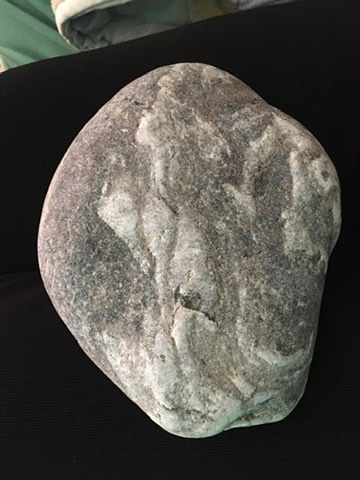
A suiseki does not need a Japanese house to look good. A quiet corner and a little attention are enough. Here are our tips, born from experience and tradition.
How to choose your first suiseki
The most important criterion is also the simplest: choose the stone that makes you stop and look. Then, a few practical questions:
- Where will you put it? Vertical stones (mountains, waterfalls) suit a narrow bookshelf; horizontal stones (islands, distant mountain ranges) suit a low piece of furniture.
- How much space is there around it? A suiseki needs "breathing room": a small stone with empty space around it is better than a large stone squeezed between other objects.
- What atmosphere are you looking for? A mountain stone gives solidity and calm; a pattern stone or an abstract stone is more contemplative and mysterious.
If you are undecided, write to us: we will gladly help you choose, even with a few extra photos. See the available suiseki.
The right place
- At eye level or slightly below. A suiseki is looked at up close, almost face on.
- Against a simple background. A light, plain wall is perfect. Avoid backgrounds full of objects or strong colours.
- Away from direct sunlight, which can damage the wood of the daiza.
Light
Side light, the kind that comes through a window in the morning or afternoon, is the best: it creates shadows that bring out the relief of the stone. If you use a lamp, choose a warm, soft light, aimed slightly from the side.
A trick enthusiasts use: lightly wet the stone with a spray bottle before looking at it. Water darkens the surface, brings out veins and colours and "wakes up" the stone, recalling the sea or river it came from.
Inspiration from the tokonoma
In the traditional Japanese house there is the tokonoma, a slightly raised alcove devoted to beauty. It usually holds three elements:
- a painted scroll (*kakejiku*) hanging on the wall;
- a main element, such as a suiseki or a bonsai;
- a smaller accompanying element, such as a grass plant or a small sculpture.
You do not need a real alcove to recreate this spirit. A shelf, a ledge or a low table work perfectly well, as long as the space is uncluttered.
Pairing with a painting
Stone and ink painting are natural companions. The painting suggests the season or the atmosphere, the stone brings the landscape. A few examples:
- a mountain suiseki with a painting of the moon or of the setting sun;
- an island stone with a painting of waves or birds in flight;
- a dark, silent stone with a blossoming plum branch, for the arrival of spring.
Discover our sumi-e paintings and read Shikishi: what it is and how to display it for a few ideas.
Changing with the seasons
In Japan the display changes with the seasons. You can do it too: rotate the stones, change the painting beside them, add a sprig. It is a small ritual that helps you notice the passing of time, and it is perhaps the most beautiful secret of suiseki: learning to look, every day, with slightly new eyes.